
Watauga Resident Lookup Records
A name search has to answer a precise question. The Tarrant Appraisal District property search can tie a named owner to a parcel, its legal description, and a separate mailing address. The county real-property index can then confirm a recorded party role and instrument trail. Those are property relationships, not a household roster. For a status or case lead, use the official voter or court route that fits the person and the date.
| Record | What It Confirms | Where | Access |
|---|---|---|---|
| TAD property card | Owner, situs, mailing address, legal description, and instrument context | Tarrant Appraisal District | Public web search |
| Recorded deed index | Grantor or grantee role, document trail, and legal-description continuity | Tarrant County Clerk index | Online, kiosk, counter, or mail copy route |
| Voter status | A matching voter’s registration-status lead | Texas SOS lookup | Official status check, with protected fields restricted |
| Court docket | A filing, case number, party role, and public disposition context | Tarrant Odyssey | Online and clerk or courthouse alternatives |
| Vital index | An event, date, county, or file-number lead | Texas DSHS indexes | Index access differs from certificate access |
Start with the record that can narrow the largest uncertainty. A known address favors the TAD card and deed index. A case number is best checked at the court. A marriage or divorce date belongs in the state index before a copy request. For Watauga, county work usually leads to Fort Worth custodians, while the city court handles municipal matters.
Set a Watauga Resident Identity Anchor
Use a full name with a middle or former name, an approximate year, a Watauga or Tarrant connection, and any known street or ZIP. Keep alternate spellings together. DSHS warns that its indexes can contain errors or misspellings, and OCR in document systems can miss words. An account number, deed instrument, case number, voter identifier, or vital file number is a better anchor than a bare surname.
Compare a TAD property address with the primary owner mailing address instead of merging them. A mailing address may be elsewhere, and even a homestead indicator does not prove who occupies a site. That distinction is a useful safeguard when names repeat. If the question shifts from an individual to everyone along a roadway, the Watauga streets reference follows the address chain without turning an owner field into a resident claim.
Search Tarrant Courts for a Watauga Resident
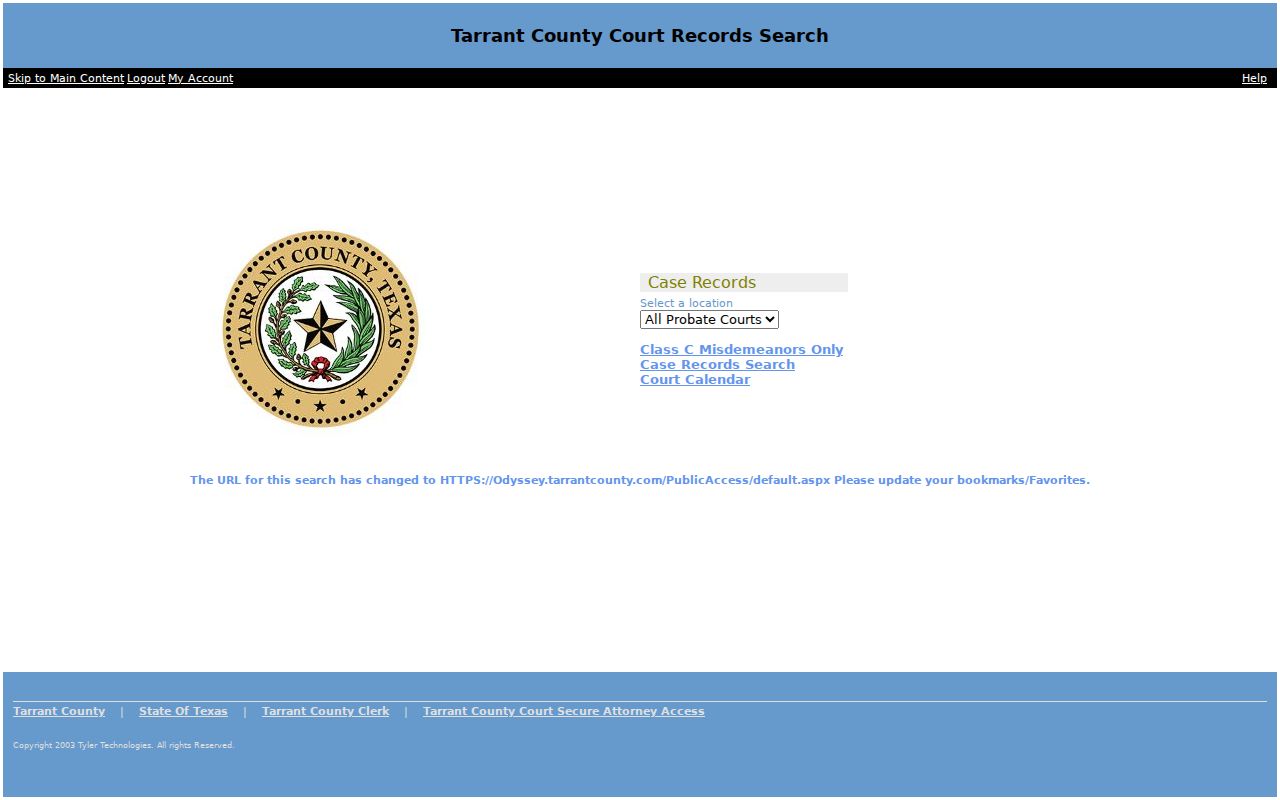
Tarrant Odyssey Public Access is the county and district party-search route. Smart Search accepts a case number or party name. The portal guide calls for last name, first name format and a partial first-and-last combination, while a case number is the most precise path. Clear retained advanced filters before changing a court, date, or case type. Older converted cases can behave differently from newer files.
For a Watauga-only municipal matter, use the Watauga Municipal Court search. It offers citation number, driver license, Social Security number, vehicle information, name, and business-name modes. The search display does not establish an oldest online case year, and a city citation is not proof of a conviction. Check the public disposition and the file’s date before relying on a name match.
The Odyssey entry screen is the documented online starting point for a court check on a Watauga name.
When online search is incomplete, public-access terminals and clerk copy routes remain the next channel, particularly for converted files or questions about released documents.
Note: Sealed, juvenile, expunged, adoption, protected family-law, and confidential attachments are not ordinary public search material.
Court Records for a Watauga Name
A court hit should be logged as a filing lead, then checked against the case number, court, dates, party role, and any public disposition. The portal does not have one universal result layout for every case type. Its documented result and docket material can include the following public items:
- Party name and the returned party or defendant role.
- Case number and, where available, a cross-reference number.
- Court or case category, such as county, district, or probate.
- Filed date, event entries, hearings, and released disposition details.
- Public attorney or representative fields and released document links.
Document links vary, and a hidden image does not mean the case never existed. The County Clerk and District Clerk can explain their own copy procedures. For probate, Odyssey is the search lead, while the Probate Clerk and the county’s copies/search help line provide the custodian route.
Watauga Resident Vital Indexes
Texas DSHS publishes marriage index files from 1966 and divorce index files from 1968. They can provide both names, dates, county, and file-number clues, but an index is not a certificate. The DSHS marriage and divorce index route is useful before deciding whether an eligible copy request is warranted. Birth and death access follows separate rules, including Texas Government Code §552.115 time periods and relationship or tangible-interest requirements.
The Texas State Library vital-index guide describes Reading Room holdings for birth indexes from 1903-1997, marriage indexes from 1966-2005, and divorce indexes from 1968-2010. These historical tools are indexes, not certificates.
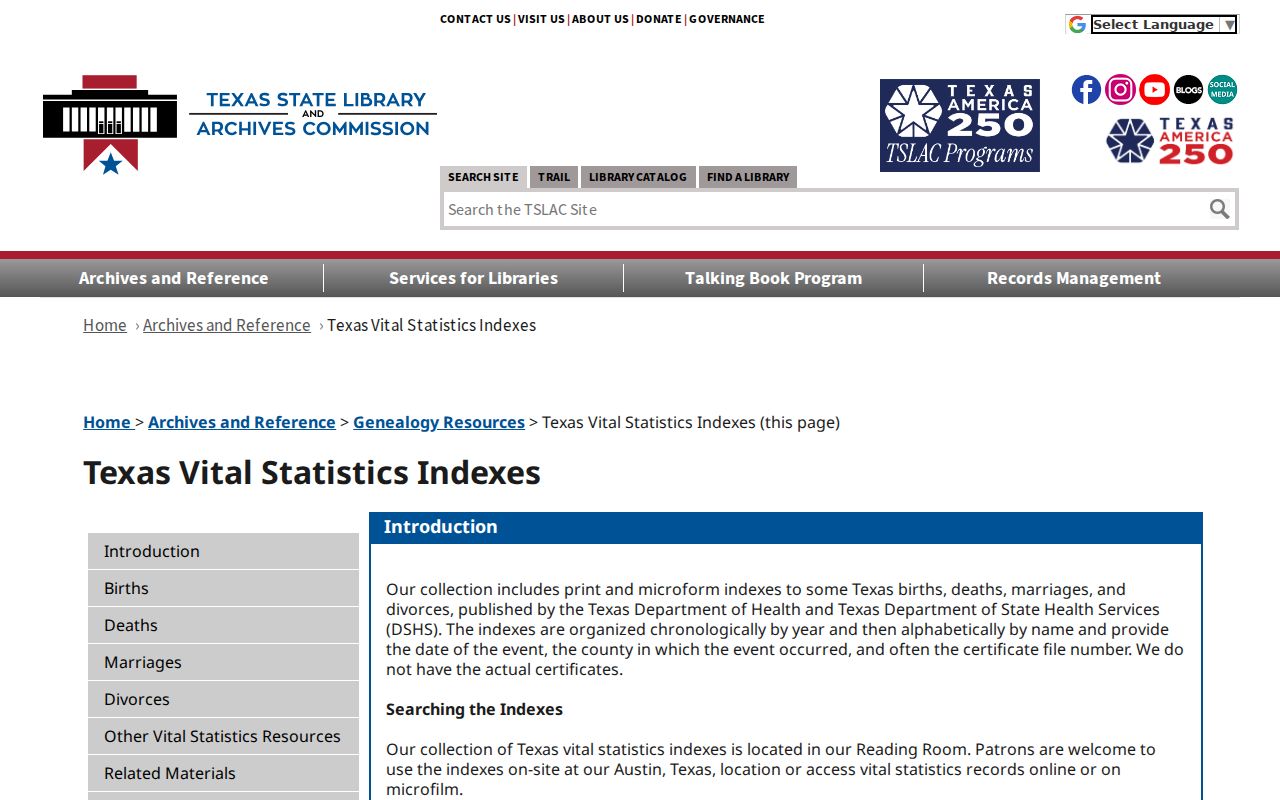
The screenshot reinforces the access distinction: historical index research can point to an event, while a current or certified record remains with the authorized county or state custodian.
For Tarrant marriages, the County Clerk is the source for a certified license. A divorce decree is a District Clerk record. DSHS forms offer verification or application-copy routes, not a substitute for the custodian’s certified document. County vital offices, DSHS online or mail channels, and the State Library’s on-site indexes cover different parts of the search.
Note: Do not use a Texas public-information request to bypass vital-record eligibility rules or disclose identification numbers from an application.
Verify a Watauga Resident Lookup
Verification means testing whether several dated records point to one person, not collecting the most results. Work from an identity anchor outward and preserve distinctions that the sources make, especially owner versus occupant and index entry versus certified record.
- Search the TAD card by known owner, address, account, or property type, then save the account, situs, mailing address, legal description, and instrument reference separately.
- Check the instrument in the county deed index by party name, grantor or grantee role, subdivision, document type, or recorded-date range.
- Use the state voter tool only as an official status check, and record only the fields the tool lawfully displays. Texas does not register voters by party.
- Run Odyssey or the municipal court search with the name and date context. Compare case number, court, date, and disposition before treating a filing as the right person.
- Use a vital index for an event clue, then ask the correct county, district, or state office about an eligible copy or verification.
- Docket
- A court’s running list of filings, events, hearings, and releases for a case.
- Index versus image
- An index points to a record; an image is the document view, which can have separate release and copy rules.
- Certified copy
- A custodian-issued copy with official certification, requested through the office that holds the original record.
Watauga Resident Heir Trail
When the question concerns an heir or estate, probate supplies a more useful starting point than a broad people search. Search Odyssey for the case lead, ask the Probate Clerk for copies, then compare the filing with the Tarrant Archives probate abstracts, which cover 1866-1959. Deeds, obituary research, cemetery material, and the Archives’ Footprints resources can corroborate a family connection without claiming that every named heir is a current Watauga resident.
The Tarrant County Archives genealogy holdings are the archival alternative when an online file lacks older context. Watauga Public Library reference staff can also help locate newspapers, yearbooks, city directories, or interlibrary-loan material. Neither route creates a current resident roster, but both can resolve a dated family question.
When Watauga Records End Online
Online results often stop at the boundary of the web index. A person who is not an owner may not appear in property data. A voter address may be restricted, a case may be sealed, or a historic record may be held only in an archive. Use the narrowest available fallback: clerk counter or courthouse terminal for a case, County Clerk copy route for a recorded instrument, DSHS or county vital application for an eligible event record, and an Elections request for authorized dated data or maps.
For city-held material with no public index, Watauga accepts a written public-information request by mail or in person. The Texas PIA can reach public city records, but it does not override vital, protected-voter, sealed, or confidential material. State voter files and county election requests carry their own access and use rules. Ask each office what it can confirm before sending sensitive information.
Library and archive alternatives matter when the question is historical. Watauga Public Library can offer reference help and in-library resources, while Tarrant County Archives handles older maps, directories, probate abstracts, land material, and historic ledgers. The right access channel depends on the record’s keeper and date.
Privacy Limits on a Watauga Resident Lookup
Texas law separates public record leads from protected details. Address Confidentiality Program participants may use a substitute address. Protected voter information can show a name with an address replaced by asterisks, while residence address, Social Security number, and driver-license number remain restricted. The Texas Address Confidentiality Program explains the substitute-address process, and the Secretary of State publishes voter-address confidentiality guidance.
If a match is wrong, return to the custodian with the account, instrument, case number, or index detail and ask for its correction process. TAD handles appraisal-card issues; the County Clerk handles deed or index context; court clerks handle docket context; DSHS and county vital offices handle vital data; and Elections handles registration records. Do not republish protected identifiers or treat a compiled commercial profile as a replacement for a custodian record.
Lawful use. Use Watauga resident records for personal genealogy, reconnecting, estate questions, civic research, or scam avoidance. Do not use a weak match to stalk, harass, intimidate, or harm anyone.